
Photocopier Leasing Costs Made Clear.
Photocopier leasing spreads the cost of a new or professionally prepared used office photocopier over an agreed term. Camelott® helps you compare the equipment payment, service cost per copy, support and contract terms before you sign.
See how leasing works ↓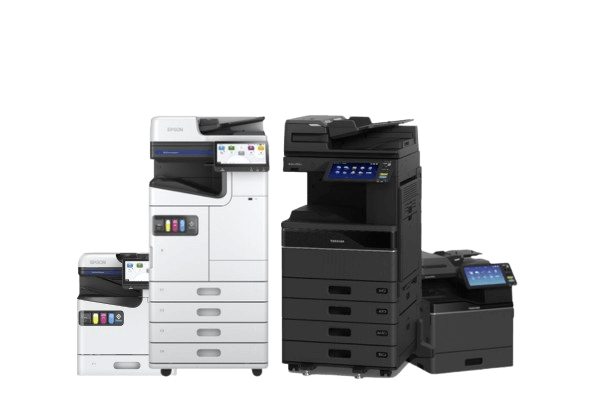
- Three to five-year terms commonly available
- No minimum print billing as standard
- Toshiba GOLD Partner
- In-house technical support
How Does Photocopier Leasing Work?
A finance provider normally purchases the photocopier and the customer pays fixed rentals over an agreed term, commonly three to five years. The equipment finance and the supplier's service agreement are normally separate contracts, even when they appear on the same proposal.
The service agreement may cover toner, parts, labour, monitoring and engineer support, with mono and colour pages charged at an agreed cost per copy. Compare both agreements before deciding whether a quotation represents good value.
The Photocopier Leasing Process
From defining the requirement to installation and ongoing support, each stage should be clear before the agreement starts.
- Define the requirement. Review users, realistic print volumes, A3 and A4 use, colour, scanning, finishing, security and workflow.
- Select suitable equipment. Compare new or professionally prepared used photocopiers that can reliably handle the workload.
- Agree the commercial structure. Confirm the equipment, lease term, rental schedule, service CPC, inclusions and any settlement.
- Complete finance approval. The finance provider assesses the application and issues the agreement for review and signature.
- Install and configure. Delivery, network setup, print queues, scanning and user training are completed as agreed.
- Support the equipment. The separate service plan operates for toner, maintenance, monitoring and technical support as specified.
How Much Does Photocopier Leasing Cost?
Pricing depends on the equipment, specification, age, meter reading, lease term, location and finance approval. These are illustrative monthly equivalents for qualifying used equipment.
Used A4 multifunction printer
From £20per month equivalentFor lower-volume A4 office printing, copying and scanning.
Used A3 multifunction copier
From £30per month equivalentFor offices needing A3 and A4 output, colour and scanning.
Higher-speed used A3 copier
From £40per month equivalentFor heavier workloads where speed and capacity are justified.
Illustrative equipment-finance figures exclude VAT and service charges. They are subject to equipment availability, agreement term, finance value, status and approval. Your written quotation will confirm the actual payment schedule and all applicable costs.
The Real Cost Is More Than the Monthly Rental
Two leasing quotations can show similar equipment payments but produce very different costs after print usage and service charges are included.
| Cost to compare | What it means | What to check |
|---|---|---|
| Equipment rental | The finance payment for the photocopier. | Payment frequency, term, initial payment and total rentals. |
| Mono and colour CPC | The service cost for each black-and-white or colour page. | Rates, click-counting method and permitted price increases. |
| Actual print volume | The pages your organisation realistically produces. | Separate mono, colour and any A3 usage using meter history. |
| Existing settlement | Any remaining commitment on the current finance agreement. | Obtain a current written settlement figure. |
| Additional charges | Any recurring or one-off costs beyond rental and CPC. | Minimum billing, delivery, administration, IT and collection. |
A useful comparison is: equipment payments + mono usage + colour usage + settlement + all applicable recurring and end-of-term charges.
Photocopiers Available to Lease
The machine should be chosen around workload, scanning, paper size, colour use and support requirements rather than the lowest rental alone.
Toshiba e-STUDIO 2525AC
A3 colour multifunction photocopier suited to general office print, copy and scanning requirements.
View Toshiba e-STUDIO 2525ACToshiba e-STUDIO 331AC
Compact A4 colour multifunction system for offices that need capable print and scanning without an A3 footprint.
View Toshiba e-STUDIO 331ACKatun Arivia C2125
25ppm A3 colour multifunction photocopier for smaller and medium-sized workgroups.
View Katun Arivia C2125Katun Arivia C3135
35ppm A3 colour multifunction photocopier for busier teams needing more throughput.
View Katun Arivia C3135When Does Leasing Make Sense?
Leasing is one funding route. Purchase or short-term rental may be a better fit in some circumstances.
Lease
Suitable where the requirement is stable for several years and the organisation wants to spread the equipment cost while preserving working capital.
Purchase
May suit organisations with available capital that want ownership and expect to use the equipment over a longer period.
View photocopiers for saleShort-term rental
May suit temporary, uncertain or project-based requirements that do not justify a conventional multi-year commitment.
Explore short-term photocopier rentalFor a broader comparison of ownership and equipment finance, read our buy vs lease photocopier guide.
Check the Agreement, Not Just the Price
- Exact equipment: confirm the make, model, specification and whether it is new or used.
- Agreement term: a longer term can reduce the apparent payment while increasing the length of commitment.
- Rental schedule: check whether figures are monthly or quarterly and whether payments are made in advance.
- Service CPC: compare mono and colour separately using realistic volumes.
- Minimum billing or included prints: establish whether you pay for pages you may not produce.
- Price changes: read what the finance and service contracts allow to change during the term.
- Responsibilities: confirm what toner, parts, labour, monitoring, delivery and technical support include.
- End-of-term process: check notice periods, return requirements, collection, data wiping and continuing rentals.
Use the photocopier leasing buyer's guide for a more detailed pre-signing checklist.
New or Professionally Prepared Used?
A lease does not have to fund brand-new equipment. The right choice depends on workload, reliability requirements, budget and how old the machine will be when the agreement ends.
New photocopiers
New equipment may be preferable for critical or high-volume environments, longer planned use and access to the latest supported features.
Used photocopiers
Professionally prepared used equipment can reduce the finance cost. Check age, meter count, condition, previous environment, parts availability and remaining support life.
Read the used photocopier guideSettlement and End-of-Term Obligations
A lower new payment does not prove that changing immediately saves money. Existing finance commitments and contract-end requirements must be included.
Before changing early
Obtain a current written settlement figure, identify who receives it and check whether it is being paid separately or added to new finance.
Before the lease ends
Confirm notice deadlines, equipment return, collection costs, data removal and whether rentals continue until the finance provider receives the required notice or equipment.
The Photocopier Must Work in Your Environment
Finance is only useful when the equipment is correctly specified, configured and supported throughout the agreement.
Specify the complete requirement
Consider users, print volume, peak workload, A3 and A4, colour, paper capacity, finishing, duplex scanning, secure print and required destinations.
Configure printing and scanning
Camelott® can support network setup, drivers, print queues, scan-to-email, folders, Microsoft 365 and compatible Google workflows.
In-house technical support
Our own engineers and technical team support hardware, printing, scanning and related workflows, with remote assistance where appropriate.
Multi-brand choice
Camelott® is a Toshiba Gold Partner and Katun Arivia supplier, with Epson and Konica Minolta equipment also available where appropriate.
For fleet monitoring, toner supply and wider print management, see our managed print service.
Continue Your Research
Choose a photocopier
Compare A3 and A4, colour and mono, speed, scanning and finishing.
Explore office photocopiersCompare buying and leasing
Review the practical differences between ownership and equipment finance.
Read buy vs lease guidanceManage a print environment
Learn about toner, maintenance, monitoring and wider print support.
Explore managed print servicesPhotocopier Leasing FAQs
How does photocopier leasing work?
A finance provider normally purchases the equipment and the customer pays rentals over a fixed term. A separate supplier service agreement may cover toner, parts, labour, monitoring and cost per copy.
How long does a photocopier lease last?
Business photocopier leases commonly run for three to five years. Camelott® normally recommends no more than five years because equipment age, support life and changing requirements become more important over longer terms.
How much does photocopier leasing cost?
The cost depends on equipment value, age, specification, term and finance approval. Service CPC and print volumes must be considered separately from the equipment rental. Any advertised starting price should be checked against the complete written quotation.
Does a photocopier lease include toner and maintenance?
Not automatically. Equipment finance and service are normally separate. Toner, parts, labour, monitoring and engineer support can be included under the supplier's service agreement.
What does CPC mean?
CPC means cost per copy or cost per click. Mono and colour pages normally have separate rates. Apply both rates to realistic monthly volumes when comparing quotations.
Can a business lease a used photocopier?
Yes. Professionally prepared used photocopiers can be financed, subject to the equipment, finance value and approval. Check age, meter count, condition, support life and likely age at the end of the agreement.
Does the customer own the photocopier at the end?
Do not assume ownership transfers automatically. The position depends on the finance agreement. Ask the finance provider to explain the end-of-term options and obligations in writing before signing.
Can Camelott® compare an existing agreement or quotation?
Yes. Camelott® can review the equipment, payments, service CPC, print volumes, settlement and current requirement to compare the overall commercial position.
Compare the Whole Photocopier Agreement
Tell us what your organisation needs or send us the figures from an existing agreement or competing quotation. We can review the equipment, lease term, payments, CPC, print volumes, settlement and support structure.